Bespoke Software · System Design · 2026
Limatus Bespoke OS
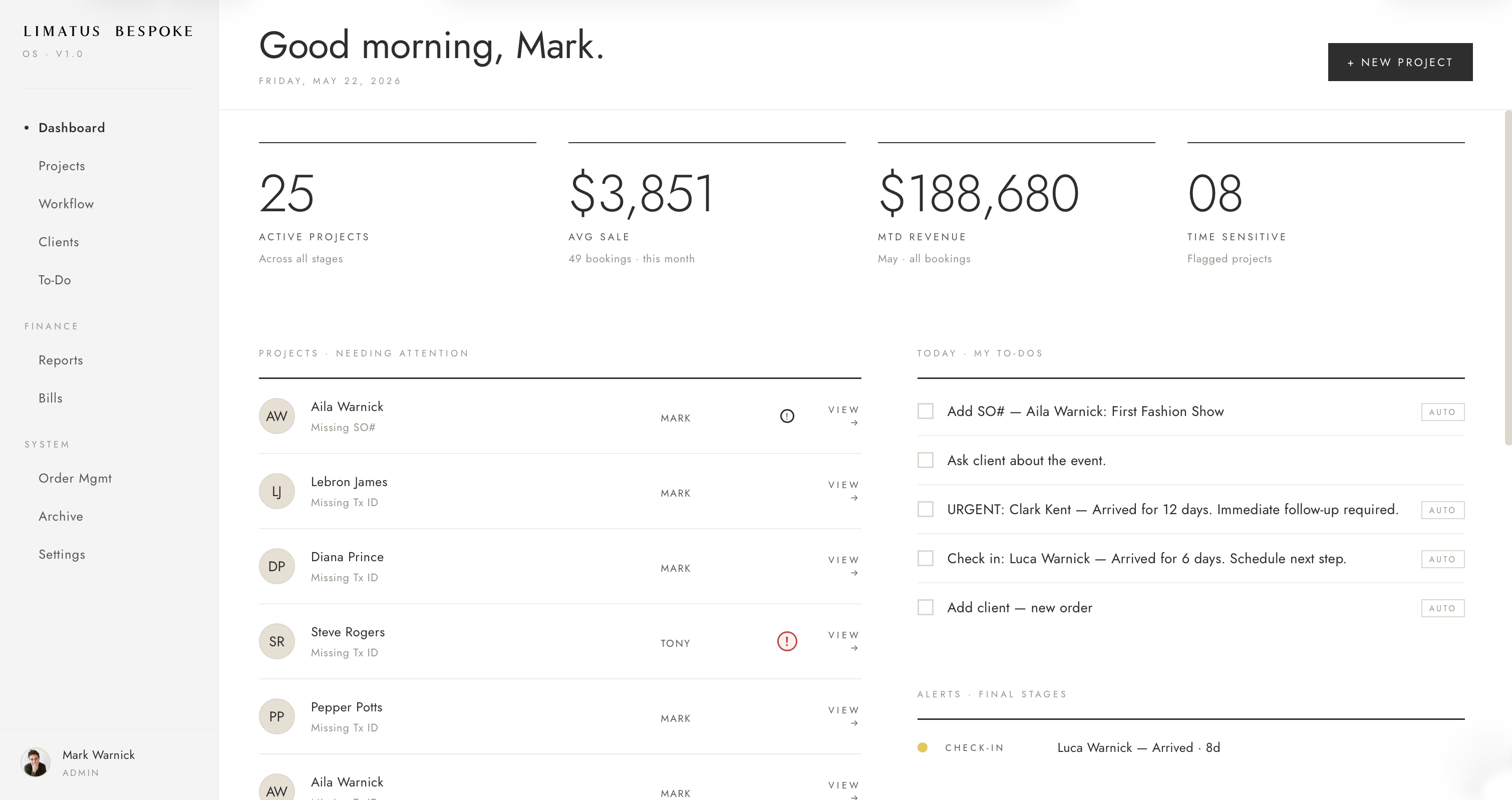
A custom operating system for a bespoke fashion studio — not built for the business as it is, but for where it's growing.
Client
Limatus Bespoke
Services
System Architecture · POS Integration · AI-Native Design
Year
2026
The Challenge
Five systems. No single window into the business.
Limatus Bespoke is an experience brand — every garment, every fitting, every client interaction is designed to be exceptional. But behind the scenes, the team was cobbling together data across four or five different systems with no clear picture of how the business was actually functioning.
Spreadsheets. Generic software forced into workflows it was never designed for. Manual updates that needed to happen every day. If the manager walked out, they walked out with everything in their head — no way to train a replacement, no documentation, no handoff. Most of the operational logic lived in institutional memory, and every morning started with the question of whether anything had slipped through the cracks.
There was no way to keep context on a client between visits — no notes from the last fitting, no record of preferences, no way to know who referred them or track the relationships that were driving new business. That institutional knowledge lived entirely in someone's head, and walked out with them when they left.
The team was spending more time fighting with their tools than creating the exceptional experiences their clients came for. The system was holding the business back.
The Approach
They think they need help making sense of it. We quietly help them build for what comes next.
Clients rarely arrive asking for a systems redesign. They arrive asking for help making sense of the situation they're in or they heard AI can make their business magically better. But underneath every operational tangle is an architecture problem — and that's what we actually solve.
We design systems, strategies, and experiences. Not because clients ask for that — they often don't know that's what they need — but because it's the foundational work that compounds over decades. A new tool solves today's problem. A redesigned system changes how the organization thinks and moves for years.
What we're really doing is installing an embedded futurist inside the team. By the time the project is over, the client isn't just using a better system — they're thinking differently about what their business could become.
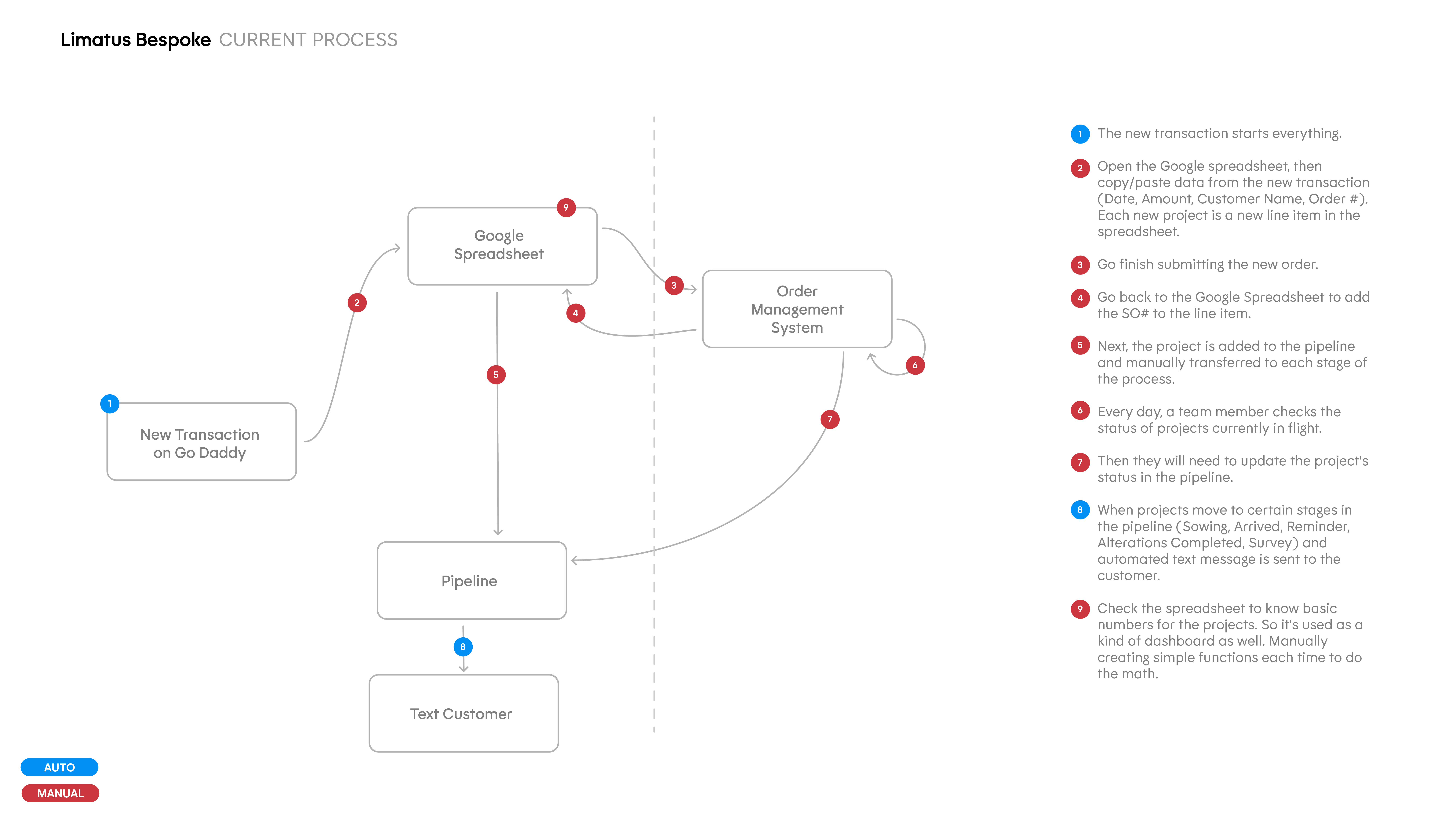
Before — The current process mapped out
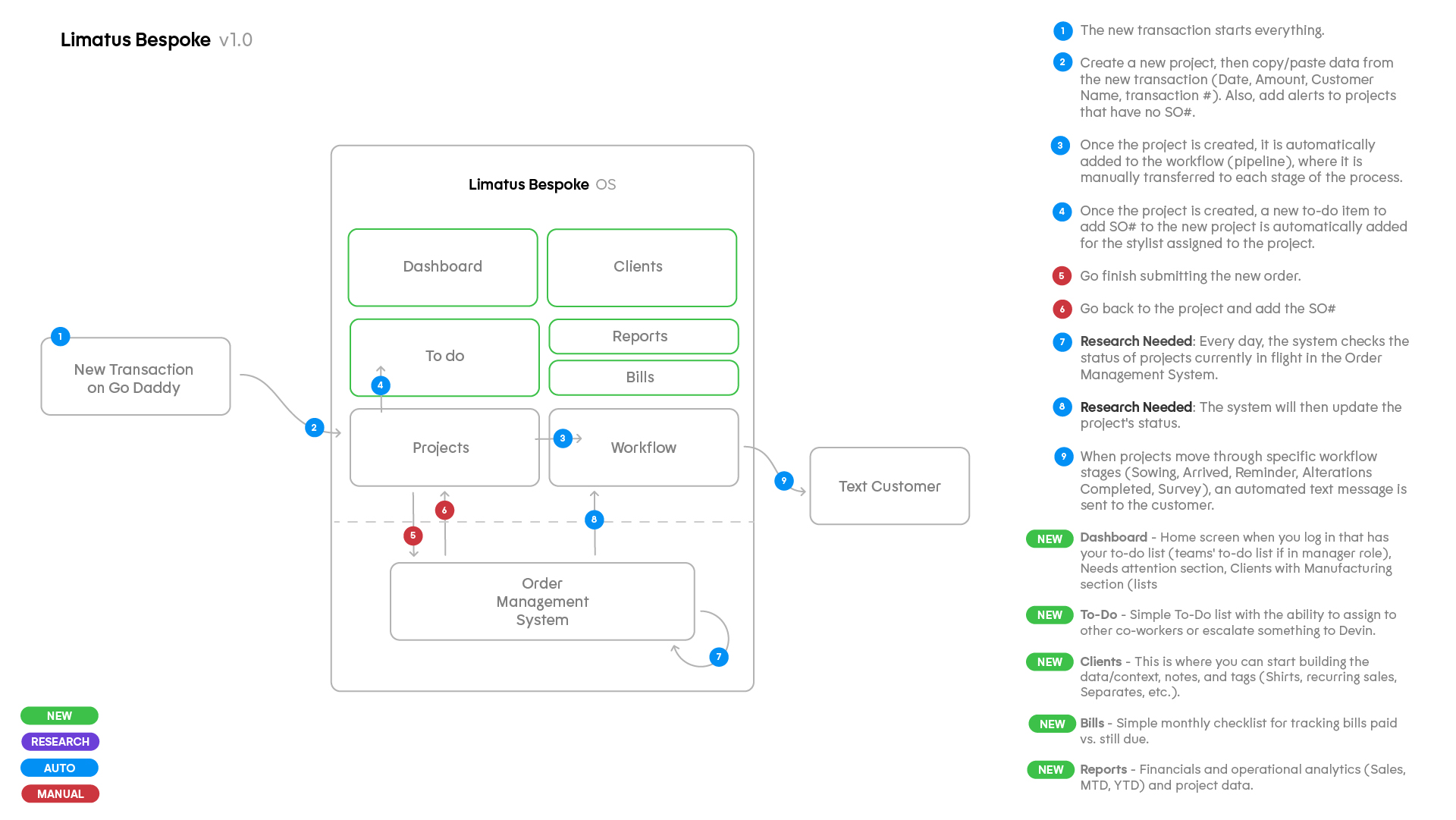
After — The system we designed and built
What Was Built
01
Two-Environment Architecture
Staging and production environments from day one — isolated databases, separate Vercel deployments, and a proper development workflow. Every change is validated before it ever touches the live system.
02
Brand-Guided Design System
Every screen, token, and typographic choice was derived from Limatus's own brand guidelines. The OS doesn't feel like off-the-shelf software. It feels like Limatus.
03
POS Webhook Integration
When a client's card is swiped on the studio's Poynt terminal, the OS automatically creates a project record in real time. No missed sales, no manual entry — the transaction is the trigger.
04
Automated Task Engine
Smart tasks follow every project through its lifecycle. Missing data flags itself. Projects that sit too long in critical stages surface automatically as alerts. The system thinks ahead so the team doesn't have to.
05
AI-Native Role Architecture
From the start, the system was designed with three classes of actor: Human, System, and Agent. The groundwork for AI participation in daily operations is already in the schema — a founding decision, not a future upgrade.
06
Custom Business Logic
The studio's stage pipeline, alert thresholds, assignment rules, and operational logic are encoded directly into the OS — not worked around. The system understands the business.
Architecture
Built for where the company is growing into, not where it is.
The goal was never to digitize the current workflow. The goal was to build an operating system capable of growing with the business — and ultimately supporting AI-native operations. That meant making architecture decisions on day one that most systems only discover they need later.
01 — Data First
Unify everything into one place
Before automation or intelligence is possible, the data has to live somewhere clean. The OS became the single source of truth for every project, client, team member, and financial record.
02 — Automate
Let the system handle what it knows
With clean data in place, routine work gets automated. Card swipes create projects. Stage changes trigger alerts and client SMS. The system does the administrative lifting.
03 — Build AI
Human, System, and Agent roles from day one
The role architecture was designed with three classes of actor — Human, System, and Agent. The schema is already structured for AI participation in daily operations. A founding decision, not a retrofit.
Inside the OS
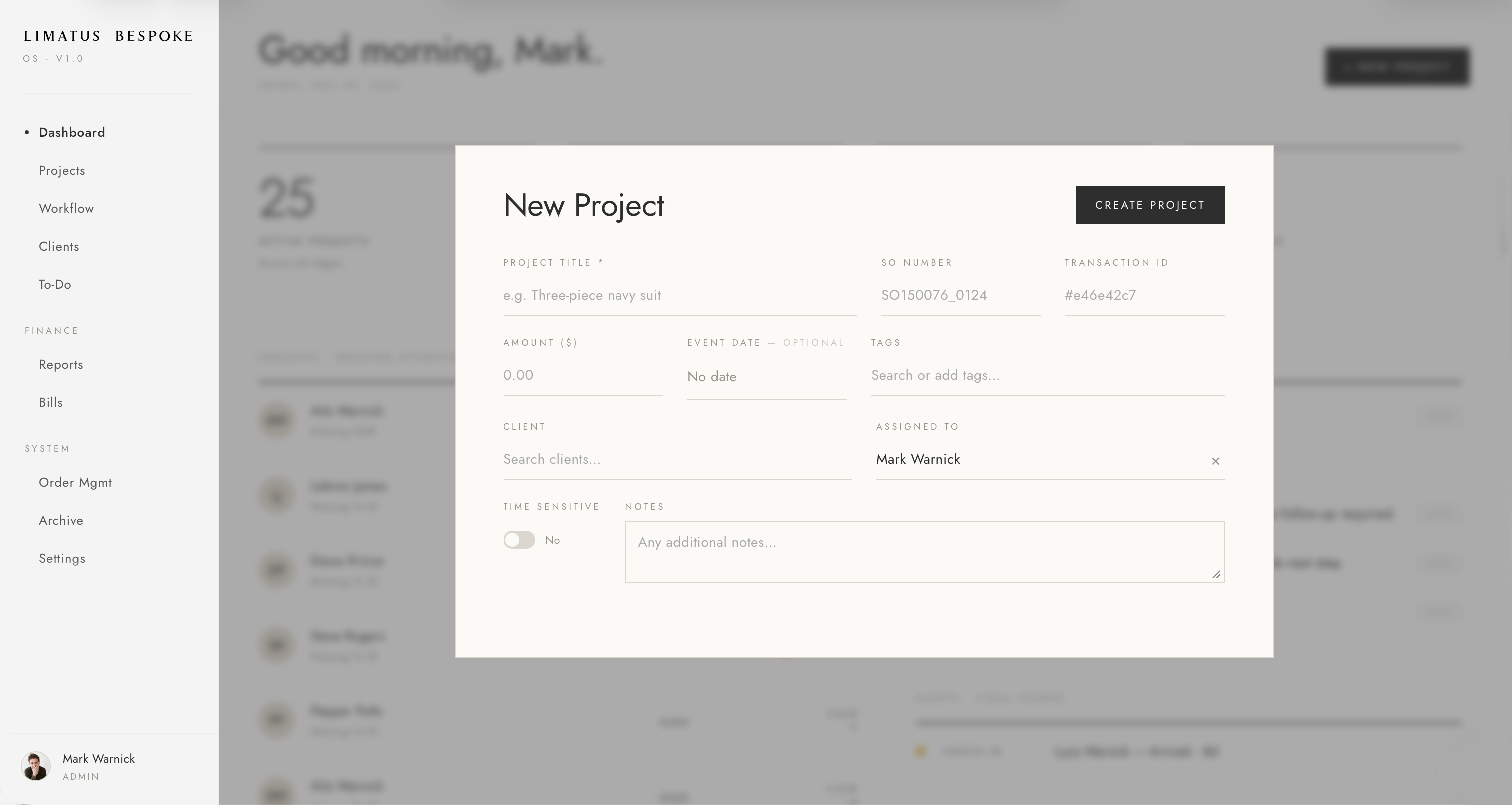
New Project — Project creation form
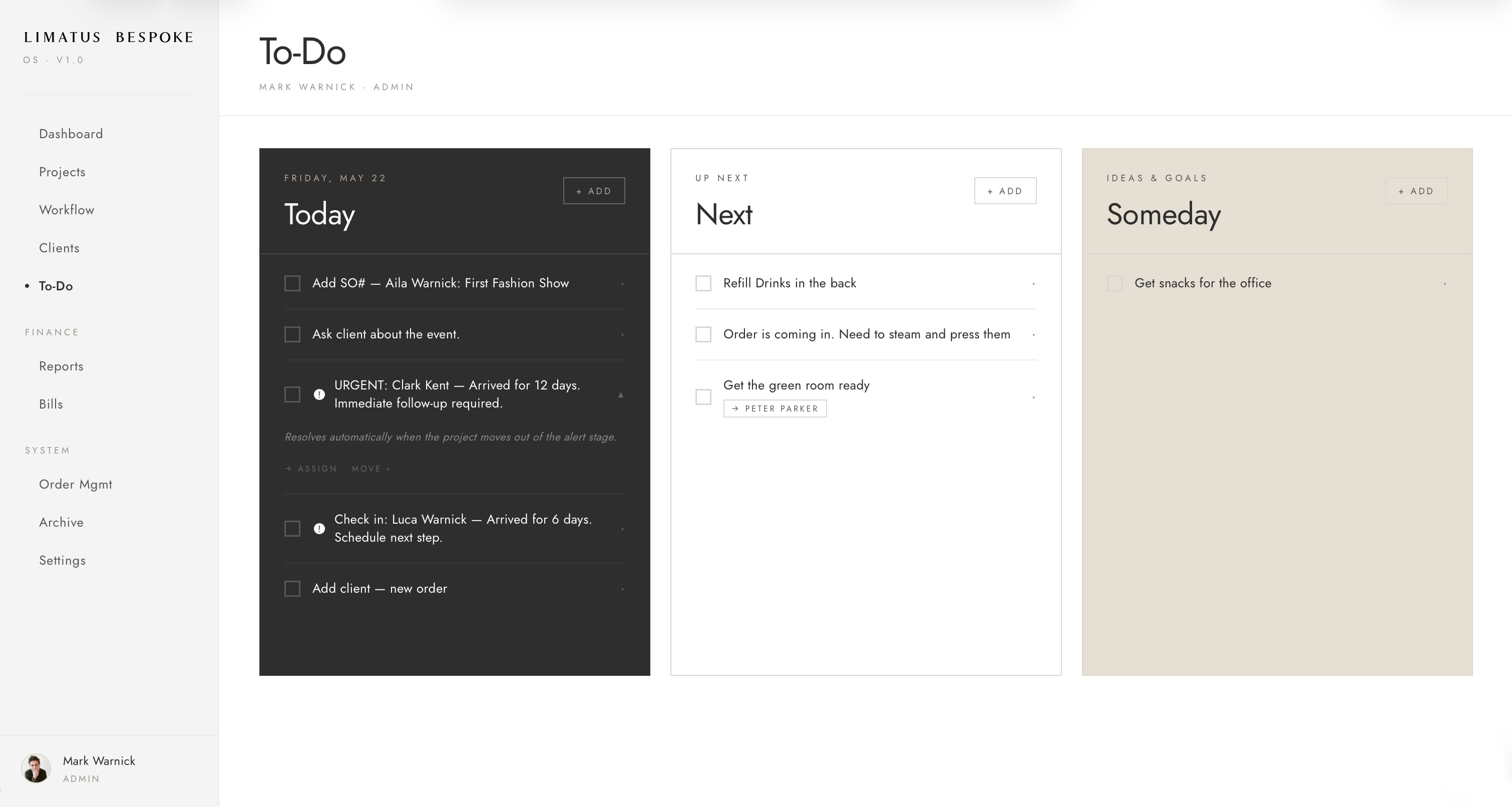
To-Do — Intelligent task board
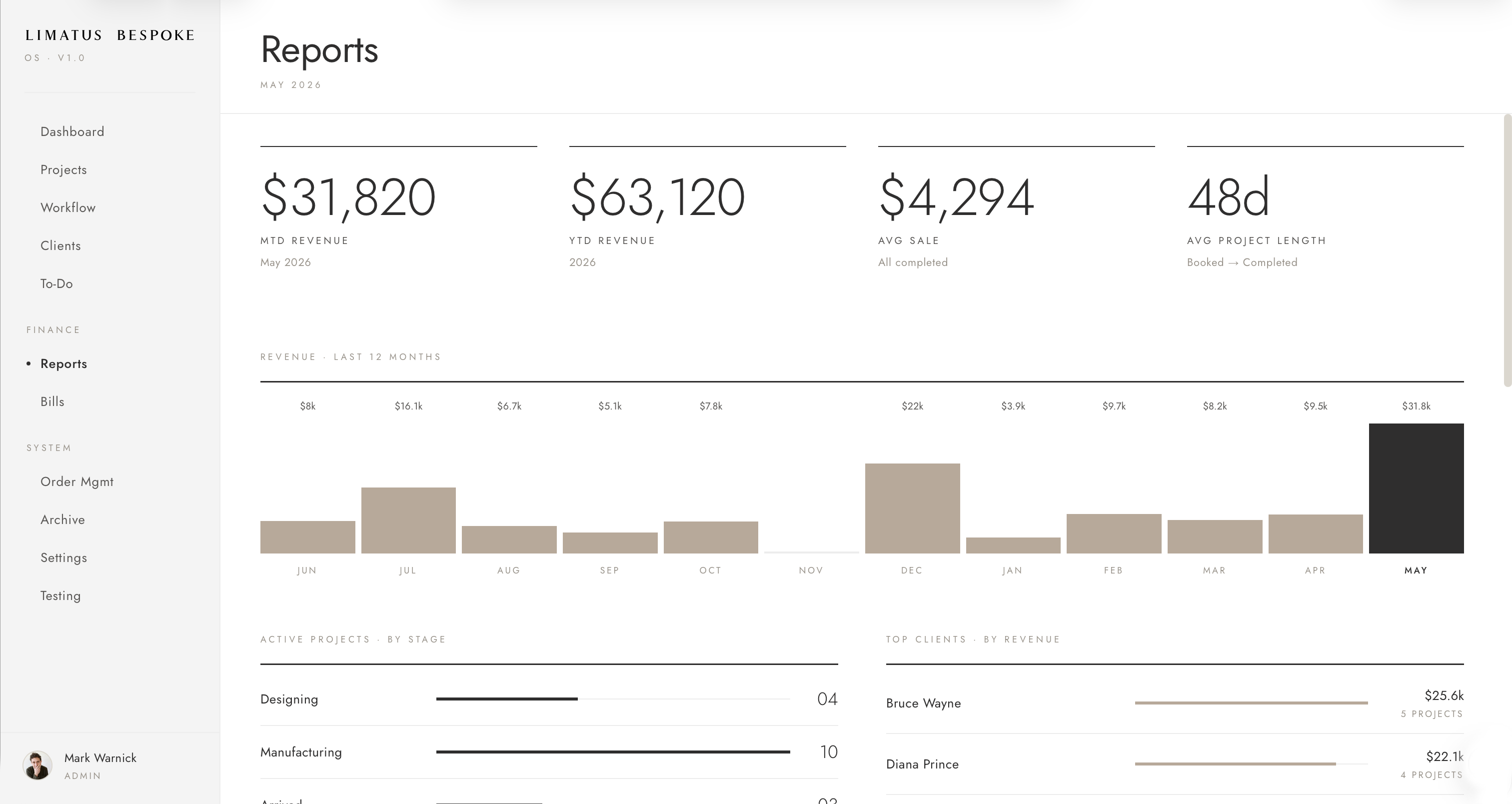
Reports — Revenue, pipeline metrics & top clients
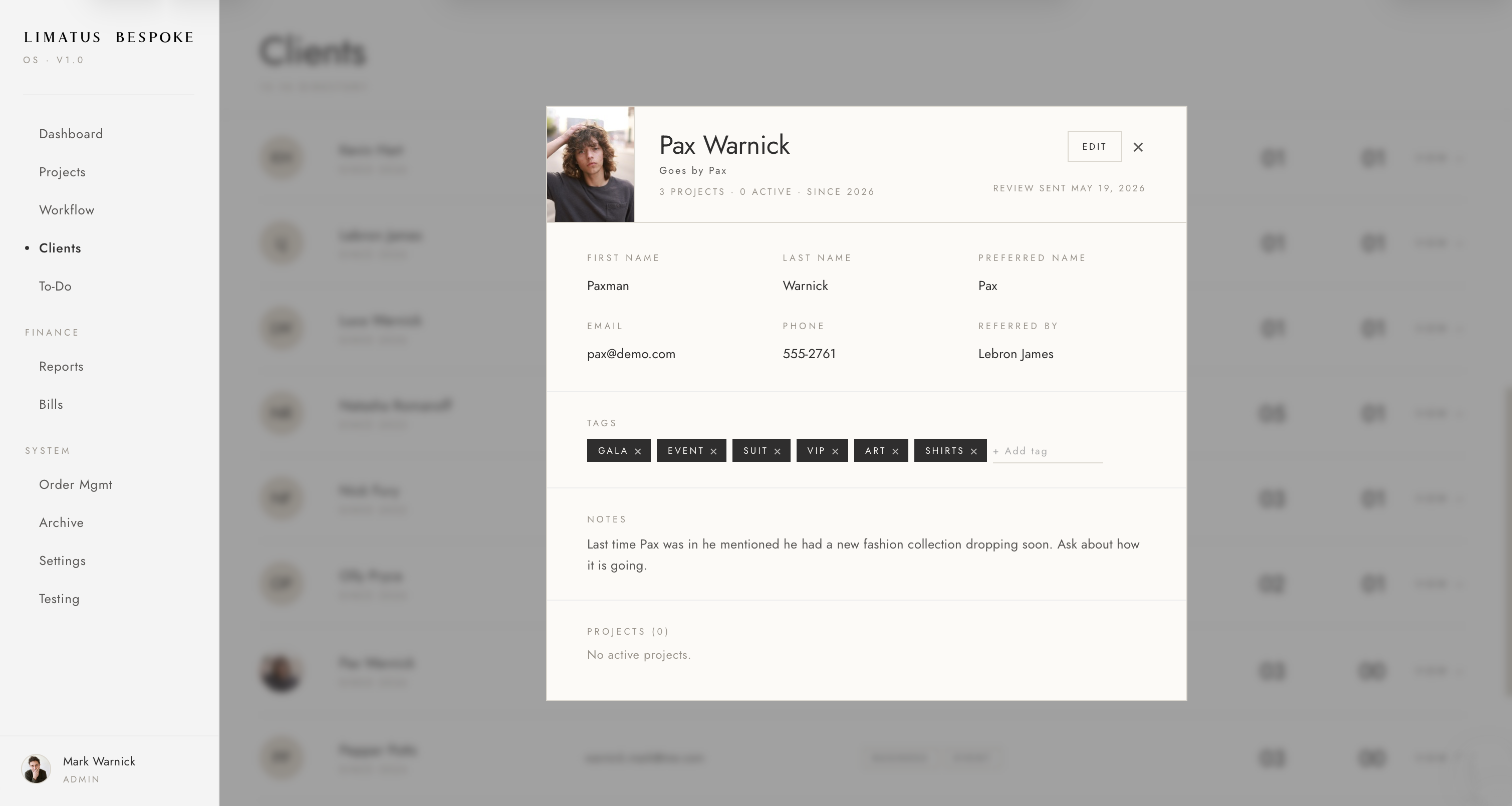
Clients — Profiles with tags, notes & referral tracking
The Outcome
A platform that unlocks new experiences — and a team with ideas for more.
Once the team started to see the system come together, something shifted. They began generating their own ideas — new workflows to automate, new ways to surface information, new experiences they could build for their clients. The platform became a canvas for what the business could become, not just a record of what it was.
From the owner's perspective, the fog lifted. For the first time, there was a single, real-time window into the business — pipeline, team assignments, client history, revenue — without someone manually reconciling it every morning. Operational logic that once lived only in a manager's head is now encoded in the system, available to anyone who needs it, and trainable from day one.
Limatus is an experience brand. This OS doesn't just run the back office — it enables the front. A custom platform built for the bespoke world, designed to unlock new client experiences and bring the business into the AI-native era.